When warehouse floor space is limited but inventory requirements continue to grow, building outward is not always practical. Automated vertical storage offers another option: build up. By using available ceiling height and bringing stored goods directly to an operator, automated storage systems can increase storage density while reducing walking, searching, bending, and other nonproductive activity.
Two common solutions are the vertical lift module (VLM) and the vertical carousel. Both are automated storage and retrieval systems (ASRS) designed around the goods-to-person principle, but they operate differently and are suited to different inventory profiles.
Understanding the vertical carousel vs. vertical lift module comparison can help facility managers determine which technology offers the right balance of capacity, speed, flexibility, and return on investment. Read on to learn which vertical storage solution is best for your industrial application:
What Is Automated Storage?
Automated storage uses equipment and software to store, locate, and retrieve inventory with less manual handling. Instead of requiring an employee to walk through aisles looking for an item, the system brings the requested inventory to a designated access point.
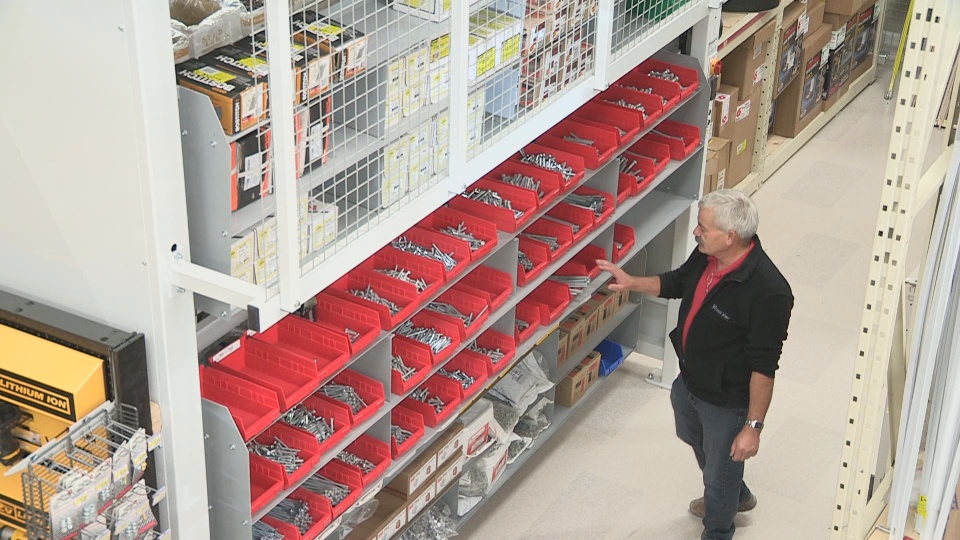
This is known as the goods-to-person concept. It can reduce travel and picking time while improving organization, inventory accuracy, security, and ergonomics. Automated storage is also a powerful space optimization strategy. By storing inventory vertically, facilities can consolidate shelving, racks, bins, and other conventional storage into a significantly smaller footprint.
Bradford Systems offers automated storage and retrieval solutions designed to make better use of existing facility space while supporting faster, more controlled workflows. Contact us to learn more.
What Is a Vertical Carousel Storage System?
A vertical carousel consists of carriers or shelves attached to a continuous chain-driven loop. When an operator requests an item, the carriers rotate vertically, similar to a Ferris wheel, until the correct carrier reaches the access opening.
As the distance between carriers is generally fixed, vertical carousels work particularly well when inventory dimensions are consistent. Common applications include small parts, tools, maintenance supplies, components, documents, and other frequently accessed inventory.
Manufacturing, automotive, distribution, healthcare, government, and parts operations are among the environments that can benefit from vertical carousel systems. Vertical carousels can save substantial floor space and typically require a lower initial investment than a vertical lift module. Their mechanical simplicity can also make them relatively straightforward to maintain.
One important limitation is height. Vidir’s Vertical carousels generally have more practical ceiling-height constraints than vertical lift modules. For facilities with exceptionally high ceilings, another vertical storage technology may be able to use that cubic space more effectively.

What Is a Vertical Lift Module (VLM)?
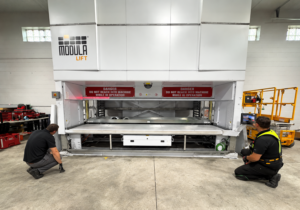
A vertical lift module is an enclosed automated storage and retrieval system built around trays stored on both sides of a central elevator or extractor. When an operator requests an item, the extractor travels vertically through the unit, retrieves the appropriate tray, and delivers it to an ergonomic access opening. After picking is complete, the tray returns automatically to storage.
The key advantage is dynamic tray storage. Rather than maintaining the same fixed distance between every storage position, a vertical lift module can measure stored item heights and position trays closer together where appropriate. This minimizes unused vertical space and allows facilities to achieve exceptional storage density.
Modula’s VLMs are highly configurable. Tray dimensions, payloads, access openings, security controls, picking technologies, software, and other features can be matched to operational requirements. This flexibility makes vertical lift modules particularly valuable for mixed inventories containing parts of different sizes and weights.

Core Technical Comparison: Vertical Carousels vs. Vertical Lift Modules
Both technologies improve space utilization and bring inventory directly to employees. The primary differences involve how they store inventory and how efficiently they use vertical space. A carousel rotates all of its carriers when retrieving an item. A vertical lift module moves an extractor directly to a specific tray and delivers only that tray to the operator.
For standardized inventory and frequent picking, a vertical carousel can provide a simple, effective solution with a relatively low initial investment. For facilities with varied inventory, demanding payload requirements, high ceilings, or more advanced automation goals, a vertical lift module often provides greater flexibility and capacity.
Storage Density and Storage Capacity
Storage density is one of the most significant differences in the vertical carousel vs. vertical lift module decision. Vertical carousels use fixed carrier spacing. If a carrier contains products that are substantially shorter than the available space, the unused area above those products cannot necessarily be recovered elsewhere in the machine.
Vertical lift modules address this issue with dynamic tray positioning. The system can place trays according to the height of their contents, minimizing empty space between storage locations. Depending on the existing storage configuration and application, vertical lift modules can reduce the storage footprint by up to about 85% or more. Certain configurations can also accommodate extremely high total inventory loads. This makes vertical lift modules especially attractive when floor space is expensive or expansion is difficult.
Ceiling Height and Unit Height
Measure ceiling height early in the planning process. It can significantly affect which technology delivers the strongest return. Vertical carousels are typically best suited to facilities with moderate ceiling heights. Their operating design and transportation requirements can limit practical unit height.
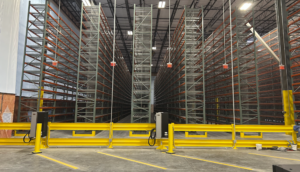
Vertical lift modules offer significantly more vertical scalability. Certain vertical lift modules can reach approximately 98 feet, making it possible to take advantage of high-bay warehouse and manufacturing environments. The tallest possible machine is not automatically the best solution. Fire protection, sprinklers, building structure, floor loading, mechanical systems, inventory velocity, and service access should all be considered during system design.
Load Handling and Payload Capacity
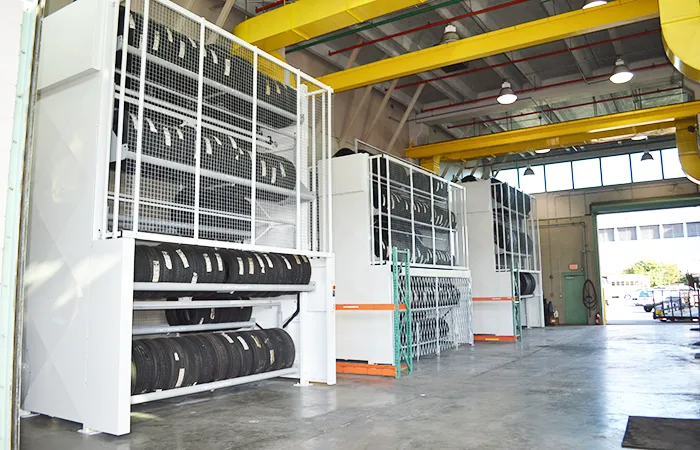
Payload requirements are another important consideration. Vertical carousels can accommodate substantial loads, with some systems handling approximately 1,430 pounds per carrier. However, as the carriers rotate together, load distribution and balance must be considered carefully.
Vertical lift modules are especially well suited to heavy and varied loads because trays are individually retrieved. Depending on configuration, a VLM can accommodate loads of up to approximately 2,200 pounds per tray. Facilities storing dies, tooling, industrial components, replacement parts, or other heavy materials should evaluate both individual tray or carrier loads and the total system capacity before selecting equipment.
Picking Performance and Ergonomics
Both technologies reduce the walking associated with conventional shelving because inventory comes directly to the operator. Vertical lift modules can provide high throughput in demanding applications. For example, Bradford Systems’ Modula Lift solutions can achieve throughput of up to 130 trays per hour, depending on system configuration and workflow.
Picking technology can further improve performance. Pick-to-light, barcode scanning, put-to-light, and similar tools can guide operators to the correct location and help reduce picking errors. Ergonomics are equally important. Automated systems present inventory at a controlled access height, minimizing repeated bending, climbing, reaching, and walking. For heavier inventory, top-picking configurations and appropriate material-handling equipment can further reduce physical strain.
Installation, Footprint, and Ceiling Constraints
Installation requirements should be considered before equipment is ordered. Vertical lift modules use a sectional, bolt-together design that can simplify transportation and installation. Depending on site conditions, installation can be completed quickly, and the equipment can be disassembled and relocated when necessary.
Vertical carousels may have different transportation and installation requirements because the equipment is generally delivered in larger assembled sections. A typical carousel installation can take approximately four to five days, compared with roughly two days for some vertical lift modules installations, although actual schedules depend on the equipment and site.
Map the proposed unit footprint directly onto the facility floor plan. Measure clear ceiling height, door openings, loading access, electrical requirements, sprinkler locations, and floor conditions. Heavy vertical lift module installations may require structural evaluation or floor reinforcement, particularly in older buildings.

Which Automated Vertical Storage System Is Right for You?
There is no universal winner between a vertical carousel and a vertical lift module.
A vertical carousel may be the better choice when inventory is relatively uniform, ceiling height is moderate, picking frequency is high and predictable, and minimizing upfront investment is a priority.
A vertical lift module may be preferable when inventory sizes vary, loads are heavier, ceiling height is available, maximum storage density is important, or the facility requires advanced software, security, and inventory-management capabilities.
The best decision starts with the operation itself, not the equipment. And that’s where our expert industrial team can help guide the way!
Next Steps with Bradford Systems
Not sure where to begin? Before choosing an automated storage system, document your available floor space and ceiling height, inventory dimensions and weights, SKU count, picking frequency, throughput goals, labor requirements, software environment, and projected growth. Then put those numbers into a system-level analysis.
Bradford Systems is the premier smart storage equipment supplier for organizations looking to make better use of their space and improve operational efficiency. Our specialists can evaluate your facility, compare vertical storage technologies, and develop an equipment strategy based on your inventory, workflow, building constraints, and business goals.
Contact Bradford Systems today to schedule a consultation and discover how much more your existing facility can do!