A dark warehouse isn’t one machine. It’s a connected system of software, storage equipment, and material movement working together, often around the clock and with very few people on the floor.
In a previous blog post, we explained what a dark warehouse is and why more facilities are exploring it. Now let’s open the doors and look inside. Which technologies make lights-out warehouse automation possible, and how do they fit together? Here’s a plain-language breakdown from our team at Bradford Systems Corporation (BSC).
The Software Layer: WMS, WCS, and WES
Every automated facility runs on software. Lights-out warehouses combine automated equipment with control software such as a Warehouse Management System (WMS) and a Warehouse Control System (WCS).
- Warehouse Management System (WMS): Tracks inventory, locations, and orders. Think of it as the facility’s system of record.
- Warehouse Control System (WCS) or Warehouse Execution System (WES): Directs equipment in real time, deciding which tray to retrieve, which robot moves next, and which order ships first.
Good data is the foundation. In the 2025 MHI Annual Industry Report, supply chain leaders named the lack of accurate, real-time data as an ongoing barrier to digitizing their operations.
Automated Storage and Retrieval Systems (ASRS)
Automated storage and retrieval systems are computer-controlled systems that store and retrieve inventory without an operator walking the aisles. They’re the backbone of most lights-out operations. Common types include:
- Pallet shuttles and unit-load systems. These move full pallets in and out of dense rack structures. Because loads are uniform, pallet-level storage is one of the easiest areas to run fully automated.
- Vertical lift modules (VLMs). A VLM is an enclosed storage tower with an automated lift that stores trays of inventory and delivers the right tray to an operator at a picking bay. Modula reports its VLMs can save up to 90% of floor space by using full ceiling height, and the Modula Lift can integrate with robots, conveyors, picking stations, and cranes.
- Carousels. Modula’s horizontal carousel rotates bins on an oval track and is suited to high-speed picking in low-ceiling spaces, while Vidir’s vertical carousels and lifts handle everything from small parts to sheet metal.
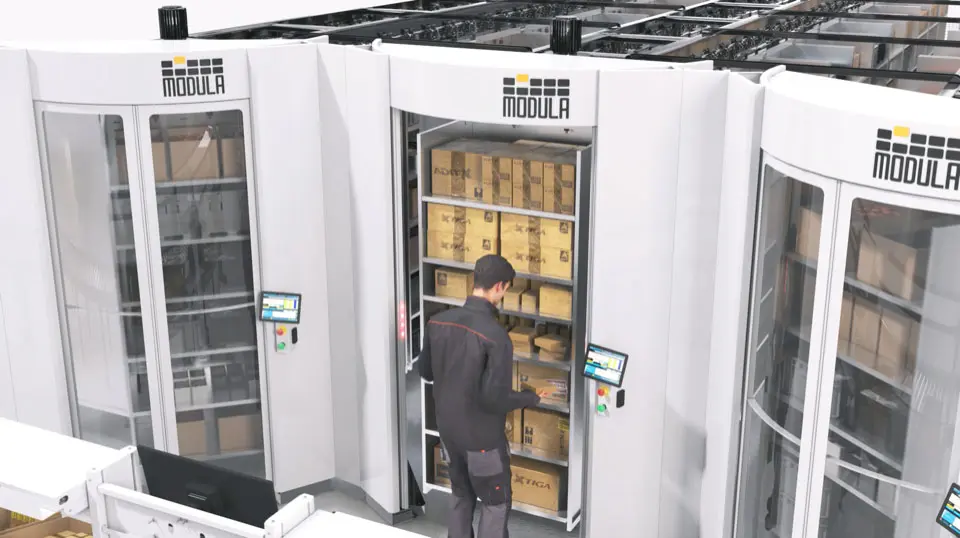
Inside each of these systems, no one works among the stored inventory. That storage zone effectively runs “dark” even when the rest of the building is staffed.
AGVs vs. AMRs: How Automated Vehicles Move Material
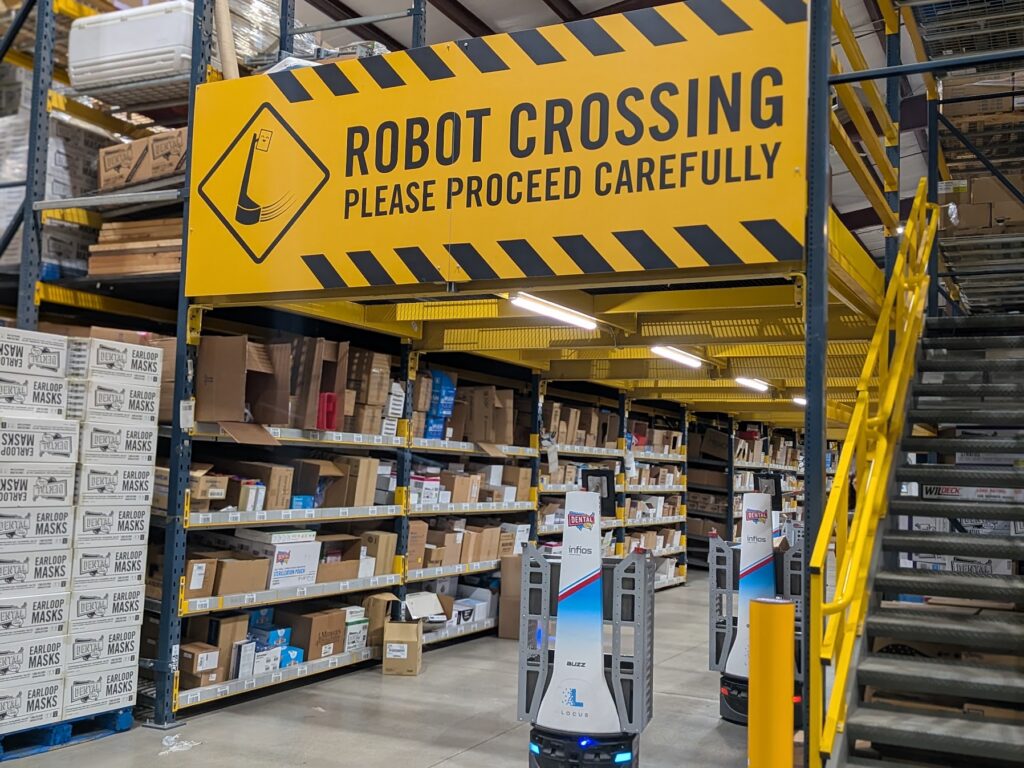
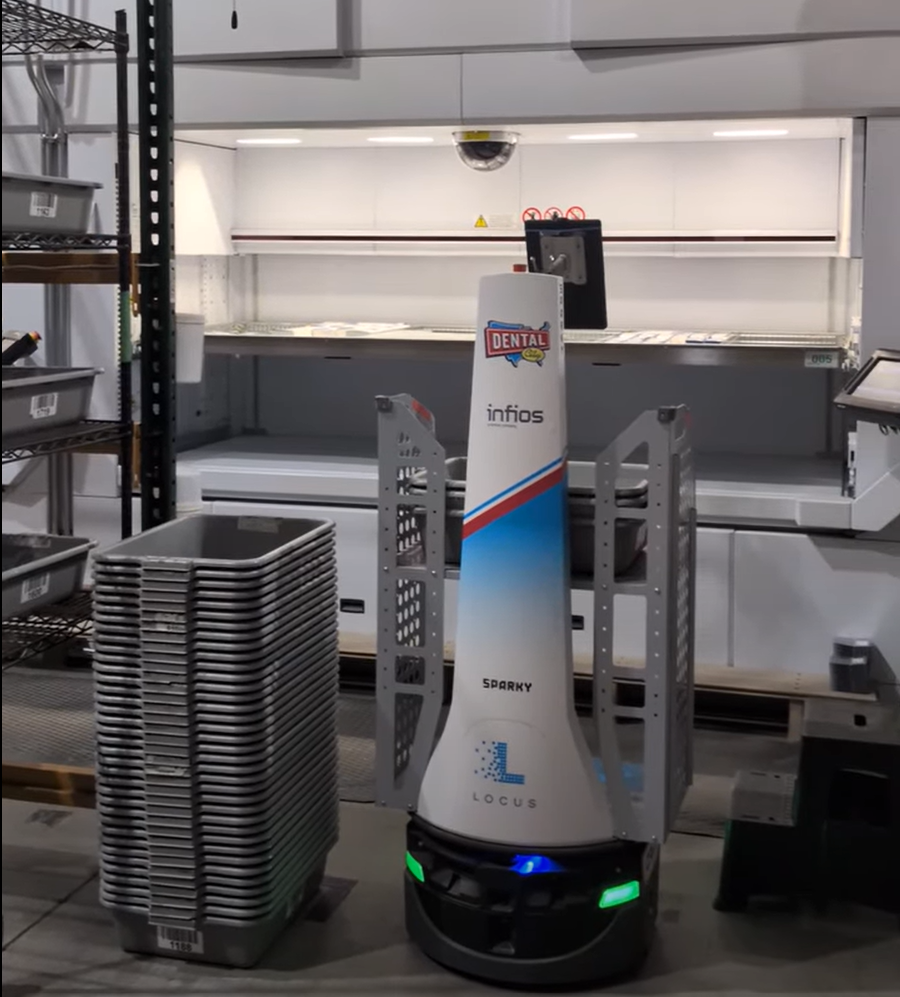
Automated vehicles carry pallets, carts, and totes between storage, production, and shipping. There are two main types, and the difference matters:
- Automated Guided Vehicles (AGVs) travel only along a predetermined, marked path. If something blocks the route, an AGV stops and waits for it to be cleared. That makes AGVs a good fit for stable, unchanging layouts.
- Autonomous Mobile Robots (AMRs) have independent navigation systems, so they can change paths and move around obstacles. They also don’t require the extensive infrastructure installation AGVs need, which makes them easier to scale as your operation changes.
Some AMRs carry attachments such as conveyors or lifting devices, and others include a robotic arm for picking tasks.
Conveyors and Order Fulfillment Robots
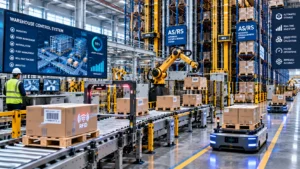
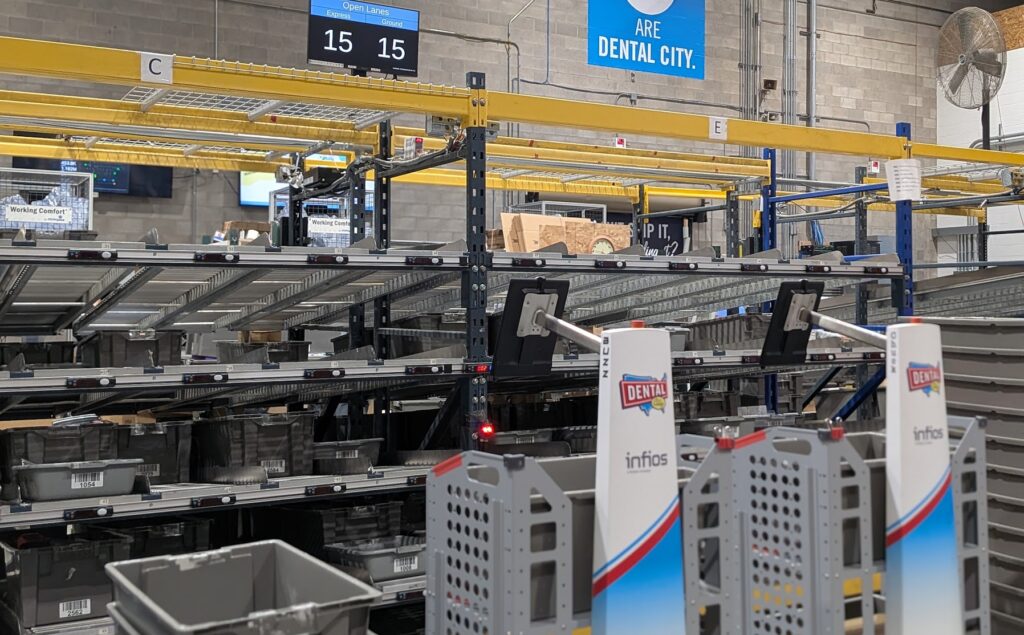
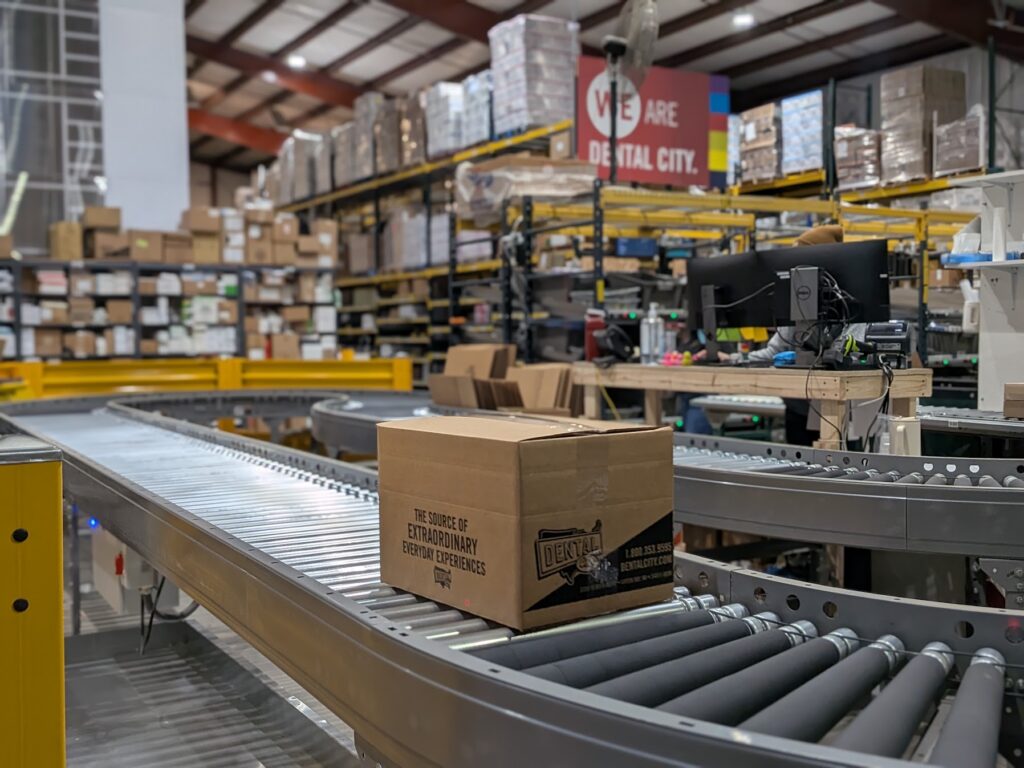
Conveyor systems connect storage to packing, staging, and shipping so products keep moving without anyone carrying them. Paired with order fulfillment robots and automated sortation, conveyors turn separate pieces of equipment into one continuous flow.
Sensors, Monitoring, and Cybersecurity
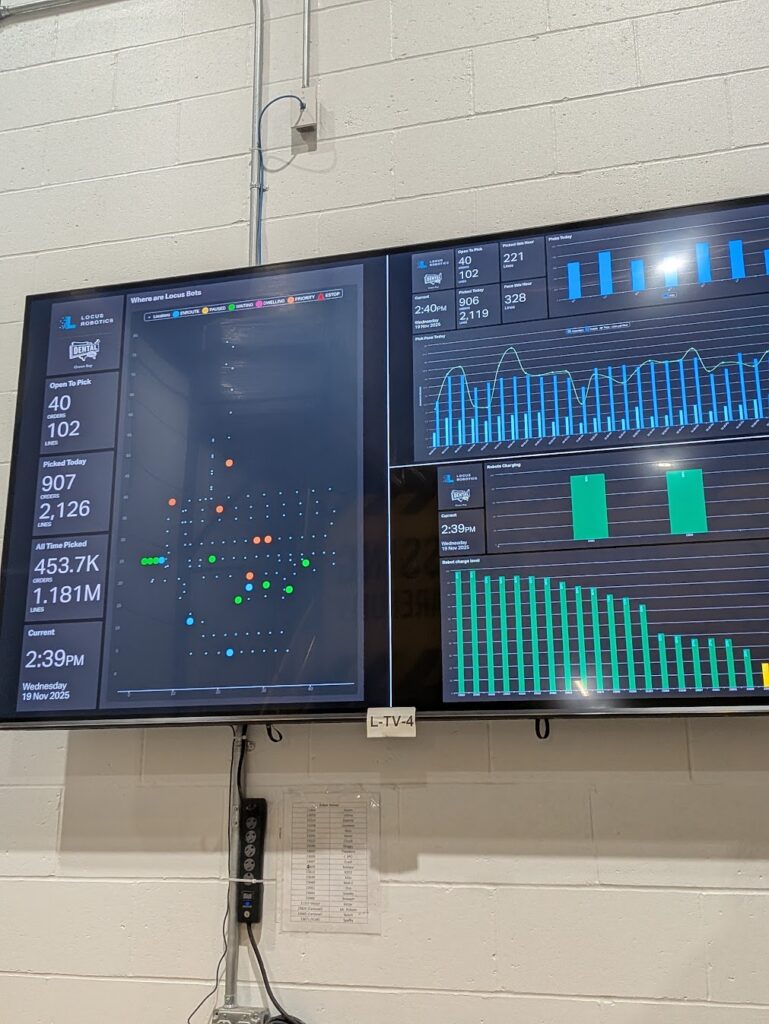
With few people on the floor, a dark warehouse depends on sensors to report equipment health, inventory levels, and exceptions to a small team watching dashboards. The MHI report found leaders expect adoption of sensors and automatic identification to reach 88% within five years.
More connected equipment also means more exposure. The same report lists cybersecurity and data security as a top technology trend shaping supply chains, so any automation plan should include your IT team from the start.
How It All Fits Together: Goods-to-Person
The principle tying this technology together is goods-to-person (also called parts-to-person). Instead of workers walking aisles to find products, material is retrieved and brought to the operator automatically. Take that one step further, and products travel straight from storage to the dock with no one handling them at all. That’s lights-out warehouse automation in action.
Wondering which of these technologies fits your facility? Our team can review your inventory, order profile, and building, then recommend the right mix. Talk to a BSC automation specialist →
Frequently Asked Questions About Lights-Out Warehouse Automation
Building Your Automated Facility
Every lights-out warehouse is built from the same core pieces: smart software, automated storage, and reliable material movement. The art is in choosing the right combination for your inventory and building, then connecting it all.
Next up, Post 3 lays out a practical, phased path for adding these technologies one zone at a time. If you missed it, Post 1 covers what a dark warehouse is and why it’s gaining momentum.
Bradford Systems helps industrial facilities plan, specify, and install everything from a single Modula VLM to a fully integrated automation system. Contact our team to start the conversation.
Sources
- BEUMER Group. Lights-out warehouse (glossary).
- MHI and Deloitte. New MHI and Deloitte Report Focuses on Orchestrating End-to-End Digital Supply Chain Solutions (2025 MHI Annual Industry Report press release via Business Wire), March 19, 2025.
- Jeff Shepard, DigiKey, via IoT Insider. Safely and efficiently integrating AMRs into Industry 4.0, May 24, 2024.
- SupplyChain247. Modula company profile (parts-to-person concept).