Museums preserve, inform, and remind us of our shared history, yet that work is increasingly at risk. An estimated 85% of museums carry a backlog of maintenance and repairs, and many operate in historic or aging buildings without proper climate controls, risking permanent damage. And federal funding typically supports programs and services rather than construction, so many institutions store collections in unsuitable environments.
Planning new museum collection storage can feel daunting when you’re protecting irreplaceable items. At Bradford Systems, we help collections managers, curators, and facility directors find the right fit. Whether you need one cabinet or a full renovation, use this guide to explore storage solutions for your collection.
How Art Rack Systems Store and Preserve Art Without Limiting Access
Need art storage that’s secure, organized, and easy to access? Art rack systems are designed to protect your collection’s integrity and support long-term preservation.
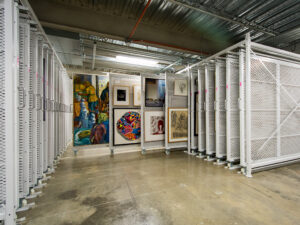
Art hangs on screens made of welded wire, woven wire, or triangle- or diamond-punched steel, and hooks and shelves let you store and display artwork of all shapes and sizes. Art rack storage integrates anti-tip rails and anti-vibration mechanisms for extra stability and protection during operation.
Art racks can be installed several ways, depending on your space and collection:
- Modular pull-out art racks, like Spacesaver’s Mod-Glider Pro™, are double-sided screens hung on standalone structures anchored into the floor. They pull out for display, and keep aisles clear when closed. They aren’t permanently affixed to your building, so they’re easy to relocate or add on to as your collection grows.
- Static, wall-mounted art racks make use of empty wall space to hang, display, and store collections. They’re easy to relocate and ideal for displaying and rotating entire collections.
- Lateral art racks move left to right on in-floor rails for smooth, quick access, unlike pull-out racks that extend into the aisle. They’re ideal for budget-conscious institutions storing large collections in a confined space.
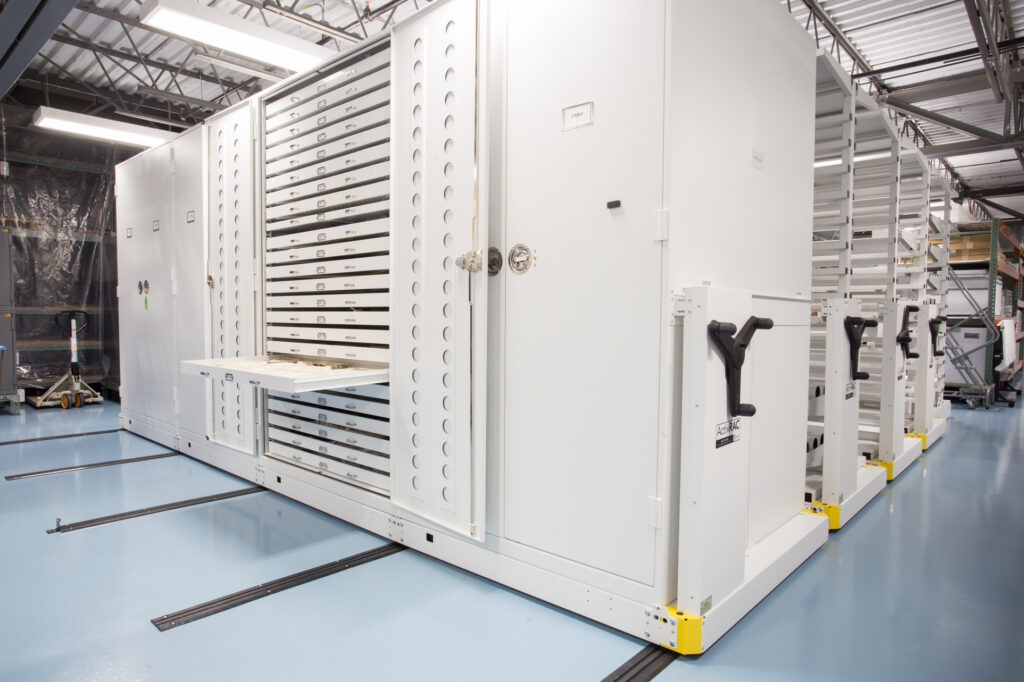
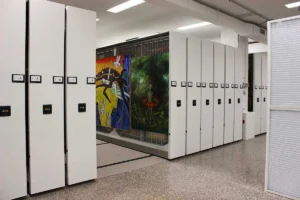
- Carriage-mounted art racks ride along floor-mounted tracks and move at the push of a button or by turning an ergonomic handle, maximizing capacity, minimizing vibration, and enabling access to the heaviest collections. Add a canopy top to help prevent water damage, carriage fillers to conceal internal components, or pin pads to control access.
- Floor-supported art racks are best for floors that can handle the weight of the system and stored artwork. They provide stability and guidance while limiting dust and debris.
Textile Racks: How to Preserve Delicate Fabrics
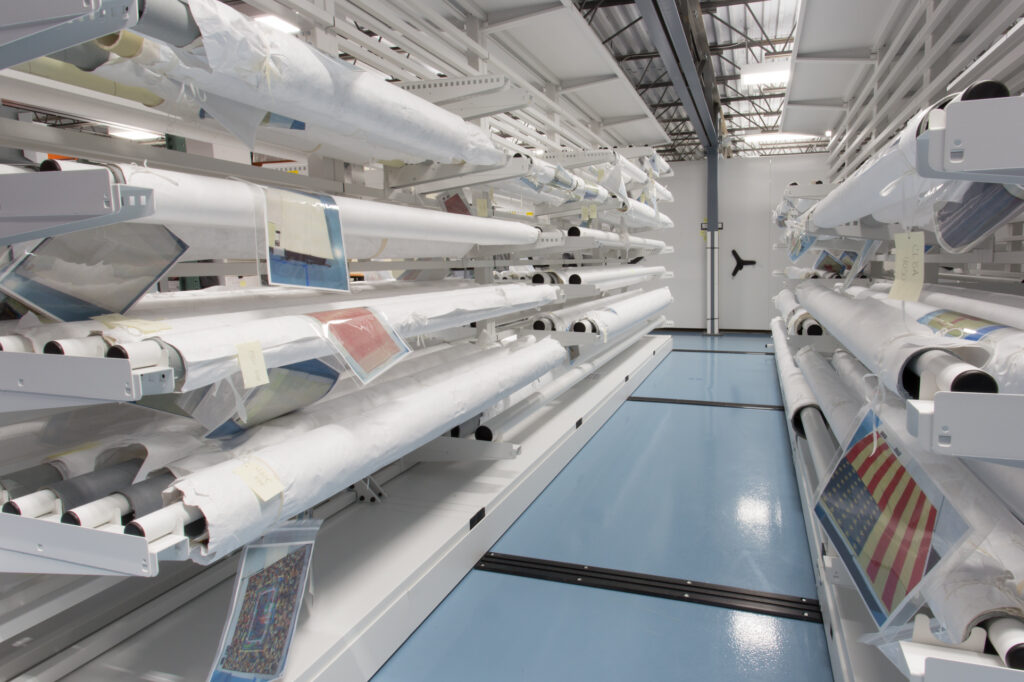
Folding textiles for a long time can cause creasing and permanent damage. Roll flags, quilts, rugs, uniforms, and other textiles onto tubes and place them on cantilever racks, which have horizontal arms that project outward on one side. You can customize rack height, arm length, tube length, and easily adjust them as your collection grows.
Mount textile racks on the floor or wall, install them on a high-density mobile system to increase capacity, or place them on a rolling caster base for maximum flexibility. Canopy tops and base covers add protection and a polished look.
Museum Cabinets: Preserve and Protect for the Long Run
Museums need controlled environments, high security, easy access for research and display, and flexibility for evolving collections. Archival cabinets feature:
- Airtight seals that don’t absorb moisture, resist tears and abrasion, and last for decades
- Three-point latching that keeps collections secure while allowing proper air exchange when paired with optional air vents
- Non-off-gassing powder-coat paint, which doesn’t release chemical gases that can damage artifacts
- Lift-off doors for easy transfer between cabinets
- Optional UV-protected glass doors for easy identification
- Optional extra-large cabinets with bi-fold doors for easier access to large items
- Optional wheels to protect artifacts in transit
Preservation Cabinets
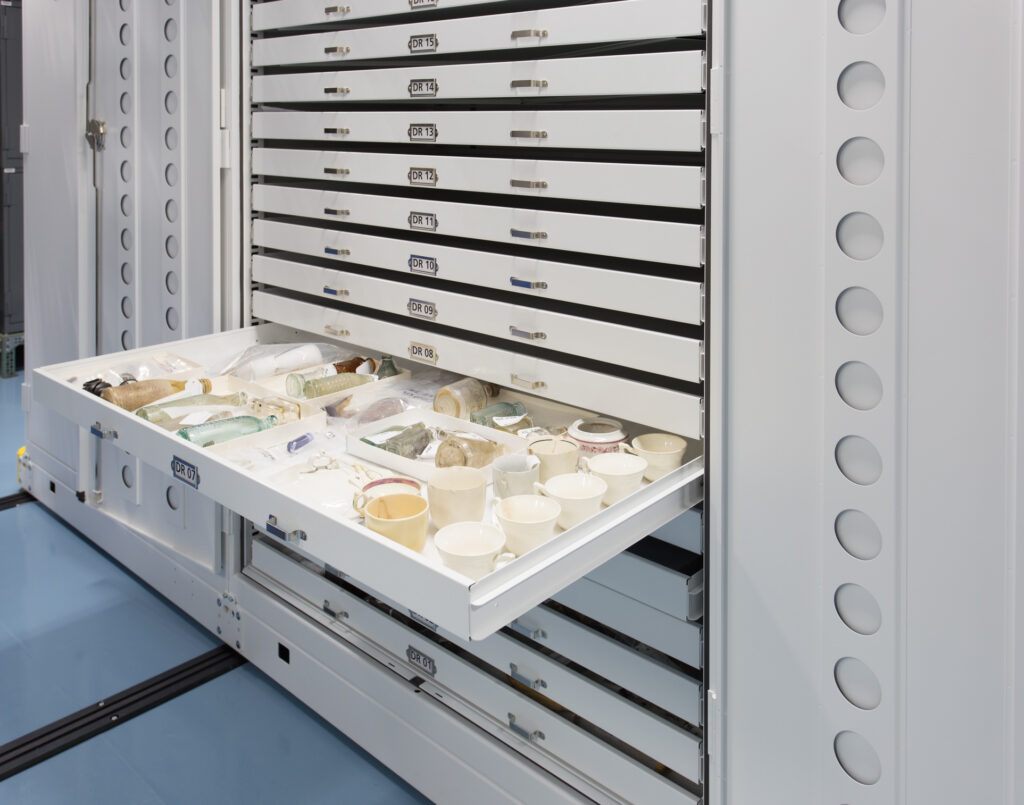
Preservation cabinets protect art, historical, and natural collections. Interchangeable interior panels include standard or heavy-duty shelves, a variety of tray sizes, and soft-close and desiccant drawers (which absorb moisture to help control humidity). Add safety stops to prevent trays from accidentally extending or corrugated panels to remove trays completely for study or display. Stack or bolt cabinets together, or mount them on compact storage systems to increase storage capacity.

Archival Flat File Cabinets
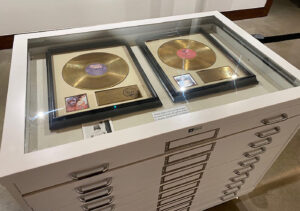
Flat file cabinets offer a variety of drawer numbers and sizes on stainless steel tracks and plated rollers for smooth, long-lasting operation. UV-protected glass tops let you display archives in coordination with current exhibitions. They protect art, maps, posters, drawings, photographs, and other two-dimensional items.
Cabinets for Natural Collections
Preserve botanical and entomology specimens in cabinets with extra space for air and fumigant circulation, a pull-out work shelf, and optional wooden drawers.
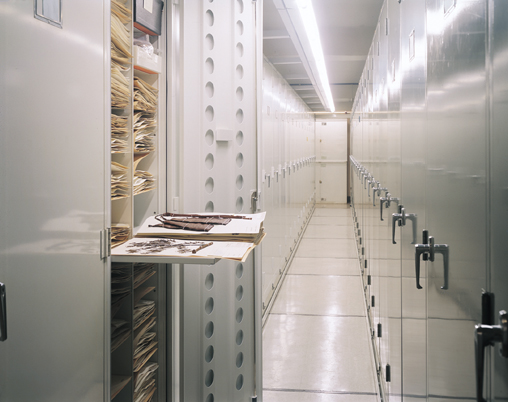
Preservation Shelving and High-Density Museum Storage
A durable, cost-effective alternative to cabinets, Spacesaver 4-Post FreeSpan™ shelving protects manuscripts, photographs, maps, drawings, files, and other valuable records from damage.
To shield archives from dust and light, use properly sized, acid-free boxes that won’t yellow or degrade paper, or add museum-quality drawers, like Spacesaver’s Nantucket pull-out trays. Each tray holds up to 100 pounds, lets staff locate items without handling other objects, and pulls out completely for study and conservation. Trays are reconfigurable as your stored artifacts change.

Mounting preservation shelving on a high-density mobile system protects fragile artifacts from damage and unauthorized access with security features like pin pad access. Hinged doors also help reduce light and dust exposure.
Frequently Asked Questions About Museum Collection Storage
Find the Right Fit for Your Collection
No two museums have the same storage needs. At Bradford Systems, we’ll consider your collection size, item types, footprint, and budget when planning your museum storage solution. Whether you prioritize mobility, security, or cost, our solutions meet industry standards for archival storage, helping ensure long-term preservation of sensitive materials.
We’ve helped museums with collections of more than a million specimens design state-of-the-art storage systems. We can help yours, too.